Inside Flexys Community Day: AI in collections gets real
Debt pressure, customer psychology and what it takes to get AI into production. What we heard at June's Flexys Community Day.
The UK is carrying £1.94 trillion in personal debt, and 450 people a day are seeking debt advice for the first time. That was the backdrop when clients, partners and the Flexys team gathered at Google's London offices in June for our annual Community Day: a full agenda on the state of collections, the psychology of customers in arrears, and what it actually takes to put AI in collections into production.
Here's what we heard.
A partnership built for end-to-end collections
Flexys CEO James Hill opened the day with the thinking behind our recently announced partnership with Concentrix. The vision is straightforward: Concentrix's global collections specialists, powered by Flexys technology, delivering people, process and technology in a single partnership.
The partnership is already adding delivery engineers and PMO capacity to the Flexys team, with 24/7 support arriving next year, plus training, consulting and change management services alongside the product. It also opens doors to new markets.
"We've always been the technology," James told the room. "This is an opportunity to deliver the whole thing."
The pressure landscape
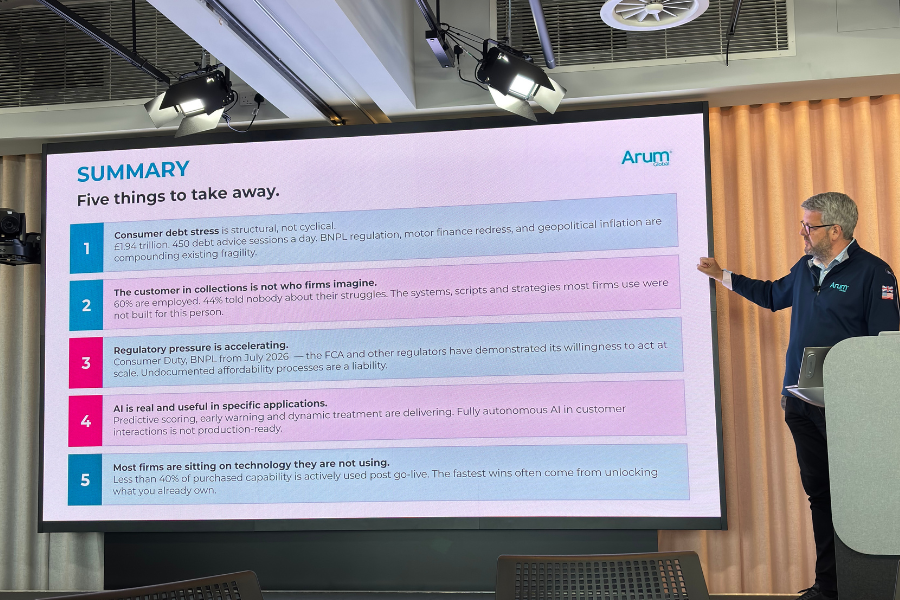
Carlos Osorio, COO at arum, set out the numbers behind the stress in UK households. Average household arrears rose 11% between 2024 and 2025. Mortgage arrears are up 22%, now averaging £12,534 per client in arrears. And the customer in collections is not who many firms imagine: 60% of StepChange clients are in some form of employment, and 44% of people in problem debt told no one about their struggles.
His sharpest warning was about the customers you can't see. One large US bank told him it charges off over a billion dollars a year on customers who never entered its collections paths at all.
"You can only see what you can see," he said. The pre-arrears space deserves far more attention than it gets.
He also flagged Buy Now Pay Later, a £13 billion market that came under FCA regulation on 15 July 2026, with many BNPL firms building collections capability from a standing start. We've written about what BNPL regulation means for arrears before, and Carlos's view matched ours: the regulatory bar keeps rising. As he put it, the old rules said don't do harm.
"Consumer Duty raises the bar even further. It's not don't do evil, it's you've got to do good."
Everyone has AI. Almost no one has it in production.
Andrew Ducker, VP of Global Collections Practice at Concentrix, brought the reality check. 93% of large UK lenders now use AI or machine learning somewhere in the collections journey, up from under 50% in 2023. But scratch the surface and the depth isn't there: 75% of organisations remain stuck in siloed pilots, and only around 13% of pilots ever make it into production.
The blockers are rarely the models themselves. Fragmented data, legacy systems and the absence of a single customer view kill most AI programmes before they start. And in a regulated market, governance can't be retrofitted. Every decision AI touches needs an audit trail, explainability and outcome tracking from day one, because the FCA and ICO will expect answers from the moment you deploy, not six months later.
He was also refreshingly blunt about conversational AI:
"Don't try and embed empathy into a bot. It's a bot."
Customers deserve honesty about what they're talking to, and behavioural design matters more than synthetic sympathy.
The science of a scared customer
Emily Sweigart, Senior Experimental Designer at Cowry Consulting, took the room through the behavioural science of debt. Around 95% of decision-making is automatic and emotional rather than deliberate, and customers in arrears are operating under fear, cognitive overload and loss aversion. A scarcity mindset alone can have the same effect on cognition as losing an entire night's sleep. Small wonder that over a third of repayment plans fail within the first three months: many were never agreements at all, just an escape from an uncomfortable conversation.
The answer is to design for how people actually behave. Segment by behaviour rather than demographics, measure engagement as an early predictor of resolution, and give customers genuine input into their own plans. People value what they help build, so a customer who shapes their arrangement defends it when things get tough.
The results back it up. Working with a leading UK bank, behaviourally segmented journeys lifted engagement among the highest-risk customers by 16% within days, feeding directly into resolutions. With a major utility provider, a redesigned contact strategy cut average journey duration by 12.8% and increased successful closures by 23.7%. Better experiences for customers in difficulty, and better recovery. The two are not in tension.
Building agents, with the guardrails on
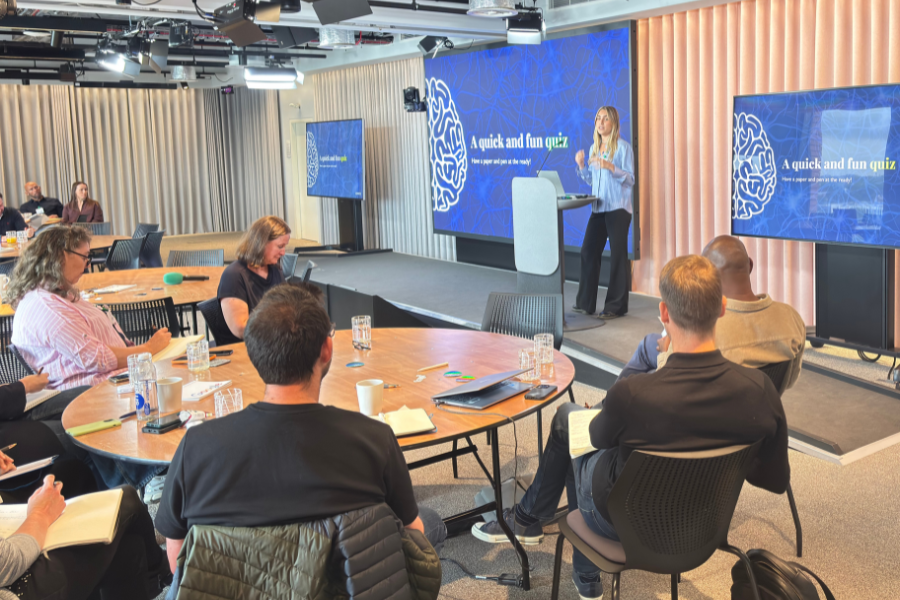
Mathias Canales, AI Solution Engineer at Google, demonstrated how quickly agentic AI has moved, building working agents live on stage using models that are now fast and cheap enough for most collections use cases. His advice: stop waiting for a better model, because the capability is already there.
The more important half of his session was governance. Google's tooling now puts permissions, gateways and prompt-injection defences between agents and enterprise data, so compliance teams keep control even as agent-building spreads beyond engineering teams.
"Trust and explainability", he argued, "are what separate a demo from a deployment".
Optimism, meet execution
Giles Bradley, Partner at KPMG, closed the external sessions with highlights from KPMG's Global Tech Report, drawing on responses from 2,500 executives across 27 countries. 68% expect to reach AI maturity at scale during 2026. His verdict: admirably optimistic, and probably wrong.
What separates the leaders from the pack isn't access to technology, because everyone has that. It's execution. The highest performers have dealt with technical debt, fixed their data foundations and invested in their people. Firms doing lots of disconnected AI experiments end up with what one of his colleagues calls "use case spaghetti": plenty of activity, little transformation.
What's new in the Flexys product
Our very own Product Manager, Simon Pritchard, rounded off the day with the product update. The headline is Complaints. Now live in the product, the complaints functionality lets customers, or third parties acting for them, raise complaints directly through the self-service portal, with automated worklist allocation, communications that update as the complaint progresses, escalation against SLA deadlines and dedicated complaint auditing throughout. Because it sits inside the same system as collections, complaints and arrears activity stay connected, with a full audit trail to evidence Consumer Duty compliance.
Alongside complaints, Simon previewed a stream of enhancements that put more configuration directly in the hands of business users, deeper security options for the customer portal, and an early look at where we're heading next: a more outcome-led agent experience and a flexible approach to AI that gives clients choice rather than locking them into a single tool. More on those as they land.
The community is the point
A theme ran through the Flexys sessions: the roadmap is built on what clients tell us. Client visits, the product advisory board, roundtables and user feedback all feed directly into what gets built next, and several of the features Simon demonstrated started life as suggestions from people in that room.
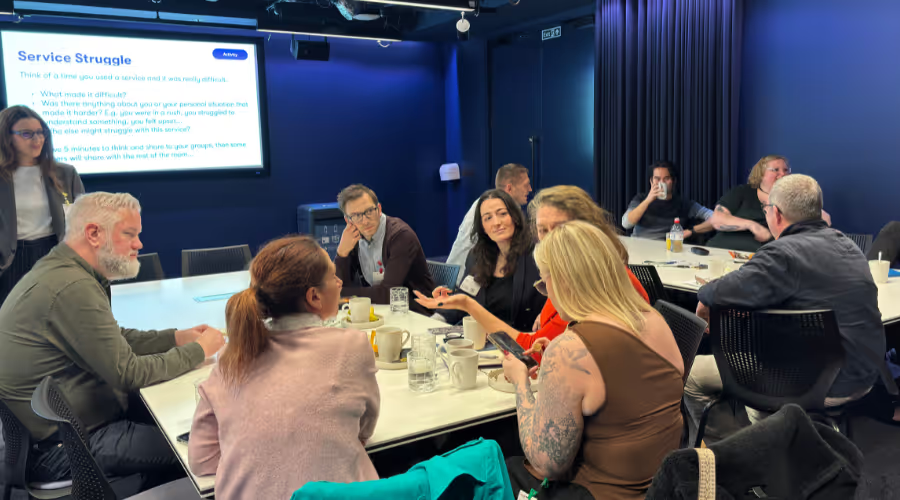
But Community Day has become more than a feedback channel. Clients travelled from Liverpool, Yorkshire, Wales, the Midlands and beyond to spend the day comparing notes with peers facing the same pressures, the same regulatory questions and the same AI decisions. The conversations between sessions matter as much as the sessions themselves: clients swapping approaches with other clients, partners connecting with the lenders they could help next.
That's a community, not an audience, and it's why we keep bringing everyone into the same room rather than moving it online.
If you'd like to see the complaints functionality or the self-service portal in action, book a demo. And if you're a Flexys client who couldn't make it this time, watch out for the invitation to the next Community Day.



.avif)