Inside Flexys' Community Day: Where compliance meets opportunity
By Hannah Duncan
Knowledge is power. And as Intel co-founder Robert Noyce famously quipped, "knowledge shared is power multiplied". Researchers found that this simple practice can boost innovation levels by as much as 53%, operational performance by 43%, and non-financial performance by 28%. It's well worth doing.
So, it was in this spirit that Flexys' clients briskly headed to Google's London headquarters on a blustery December morning. It was a day overbrimming with knowledge sharing, networking and curiosity.
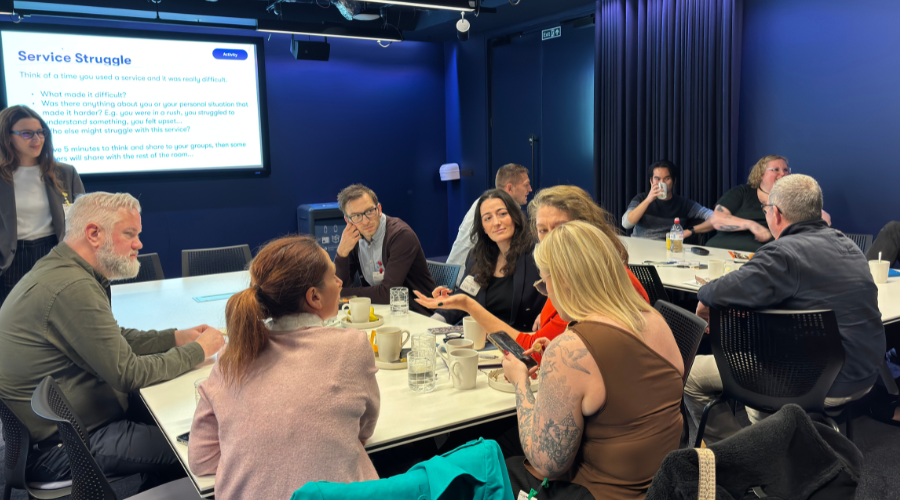
Tackling Consumer Duty head-on
Armed with piping hot coffee and flanked by flaky croissants, participants settled in as former FCA employee and current Director of Regulatory Policy at EY, Alex Roy, kicked off proceedings. "Despite a wider agenda of de-regulation, good consumer outcomes still remain really, really important", he emphasised. What's more, the regulators' laser focus is shifting to smaller firms.
The Consumer Duty requirements have caused upheaval in compliance offices around the UK. One in three (33%) reveal that it is the most challenging part of their job. Simply knowing what the duty means and understanding it are a stressful struggle for 44% and 39% of financial advisors respectively. But understanding it couldn't be more important.
As Service Designer Angelica Nesi elaborated, "everyone can be classed as vulnerable" at some point in their lives. For example, 42% of married couples will experience divorce, resulting in a loss of income and significant mental health strains. In the UK, three in five (59%) parents with children under 5 years also struggle with poor mental health, while a further two in three (66%) are buckling under the cost-of-living crisis.
According to the FCA (2022), almost one in two (47%) people in the UK have one or more characteristics of vulnerability at any moment. As the Consumer Duty seeks to prove, there is no one-size-fits-all approach. Each firm must analyse its own customers and ensure that the needs of vulnerable people are best met.
Inclusive design as a competitive advantage
In an interesting twist however, this process can make companies more competitive as well as more compliant. In a lively workshop, Angelica asked groups to consider firsthand experiences of terrible service and pain points. "Discussing examples of things that irked us all was interesting", reflects Director of Operations at Billing Finance Ltd, Sam Challenger. "It highlighted the differences we all want when interacting with businesses, and how if you focus on the extreme cases and make it easy for them, you will pick up all customers".
When you design for the extreme, you will improve things for the majority.
Angelica Nesi, Service Designer
This was at the heart of the inclusive design workshop. As Angelica emphasised, "When you design for the extreme, you will improve things for the majority". For example, what started as a simple "cool down period" gambling block to support vulnerable Monzo customers, soon morphed into a much-loved savings tool which benefitted many.
Likewise, the FCA highlight how one debt advice firm enjoyed a 13% increase in engagement, simply by employing external professionals to simplify the language on webforms. This is not an isolated case. Research by Accenture found that companies incorporating key disability inclusion criteria into their customer journeys benefit from 1.6x more revenue, 2.6x more net income and 2x more profit compared to those that don't.
Making the UK's financial sector more inclusive and competitive is exactly what the FCA is aiming to achieve with the Consumer Duty, explains Alex. For firms, it's a golden opportunity. So long as they can prove they are using tools to improve the lives of consumers, there is an open invitation to innovate.
A playground of technological opportunities
Innovation in the world of debt and lending comes in many forms. Senior Product Manager at Acquired.com, Lawrence Byers is passionate about the power of Variable Recurring Payments (VRPs). As he explains, the ability to automatically switch to another customer bank account in the event of a default, "optimizes the likelihood of payments being successful, and looks to recover payments when they fail".
Worryingly, around one in five UK adults are living in their overdrafts (by an average of -£709). This increases the risk of payments failing, which could in turn lead to additional fees from the bank or service provider. It could also layer on yet more stress and vulnerability. Offering the choice of multiple accounts for recurring payments can help customers avoid unnecessary charges, while benefitting businesses.
Agentic AI potentially offers another way that financial firms can boost productivity alongside compliance. As Cloud Solutions Architect at Google, Jane Malalane demonstrated, services like Gemini 3 can support teams with report generation, client summaries, compliance questions and communications drafting. "It excels in state-of-the-art reasoning", she explains. "But it goes beyond that to be an excellent model for agentic capabilities".
However, before diving in, financial firms should be careful to balance the needs of consumers against environmental damage. A single Gemini search, for example, emits 1.6 grams of carbon into the atmosphere. Navigating the way forward will require a new type of leadership that aligns the goals of the company with the goals of the many. To buffer against some of the potential damage, Jane suggests limiting the number of data sets to only those necessary.
Innovation through collaboration
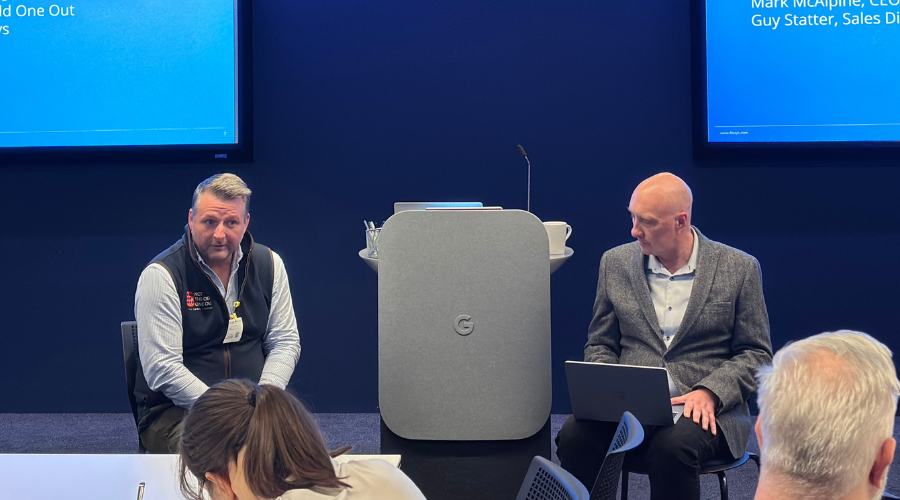
Moving forward with competitiveness and responsibility requires a healthy budget. To manage this, some smaller firms are pooling resources. CEO and founder of Not The Odd One Out, Mark McAlpine knows this world well. In a touching fireside chat, he elaborated on the plight of the UK's 390 credit unions.
Gesturing around the sleek navy room, glowing digital screens and central London location, Mark commented that most credit unions "don't have access to this kind of stuff". As somewhat volunteer-led organisations, many don't even use "enterprise-level technologies".
But credit unions are keen to close the tech gap. "They knew they had to change", Mark adds. “The only way they can step up is to have a single voice and aggregate their buying power.”
Income for credit unions grew by 29% in 2024, but unfortunately the number of loans in arrears shot up too, by 21%. Inclusive design and innovative technologies like VRP options or agentic AI could help their 2 million members stay on track. Sharing resources like knowledge, finances and suppliers can help them go further, faster.
Power multiplied
Perhaps it was Flexys' Simon Pritchard who summed up the day best when he simply said, "we want to get you all involved". From client boards to community days, customer feedback to compliance checks, bringing everyone and everything together lies at the heart of business success.
It was great to connect with other Flexys’ customers as well as partners who might provide offerings that are relevant to the solutions we are working on.
Leke Unuigbe, Plata
For participants, it was equally engaging to meet with each other. "It was great to connect with other Flexys’ customers as well as partners who might provide offerings that are relevant to the solutions we are working on", commented Operations Support Manager at Plata, Leke Unuigbe. "I’d like to take this opportunity to thank the team for putting together another fantastic day”.
Hands warmly shaken, coffee cups emptied and notepads duly filled; the day came ended much the same way it began. A blustering Kings Cross station, jovial conversations and an even firmer belief that knowledge shared is power multiplied.