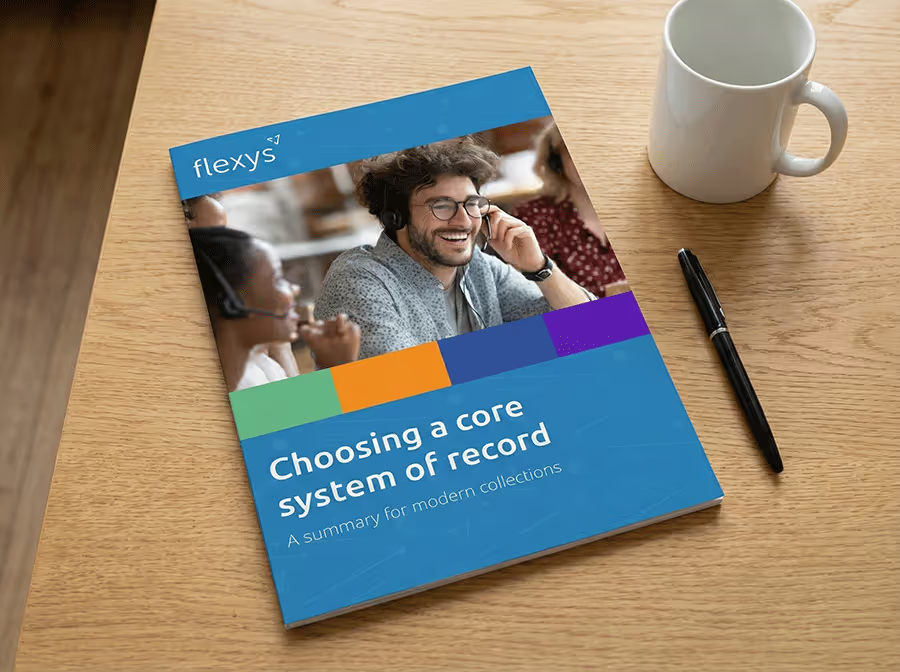
Guide: A strategic guide to modernising your debt collection system
Bridge the Digital Collections Gap and move beyond legacy constraints
Is your debt collection system an engine for growth or an anchor holding you back?

For many lenders, the question is no longer if they will replace their core collections platform, but how soon they must act to protect their competitive position. While consumer technology operates in real-time, many functions remain tethered to batch-based legacy systems designed for a different era.
The cost of inaction has now surpassed the cost of change. Financial institutions currently spend up to 75% of their IT budgets simply maintaining legacy 'run' costs, leaving a mere fraction for innovation. This guide provides a strategic framework to help you evaluate technical debt and execute a replacement strategy that secures your future.
Inside this guide, you will find:
- The case for change: Why the Digital Collections Gap makes legacy maintenance a strategic liability.
- Identifying 'Maintenance Mode': How to spot when a vendor has ceased R&D and is treating your platform as an asset for financial extraction.
- The power of real-time: Why moving from batch processing to event streaming is the single most critical technical differentiator.
- Cloud-native vs. 'Lift and Shift': A breakdown of the 'Flexys standard' vs. monolithic software installed on remote servers
- Operational archetypes: Identifying if your organisation is a Risk-Mitigator, a Relationship Builder, or an Innovator.
- A three-phase evaluation framework: Moving beyond 'Demo Dazzle' to conduct rigorous assessments and meaningful Proof of Concepts.
- Commercial evolution: Shifting from rigid user quotas to fair, volumetric pricing models that align vendor revenue with your success.