FTT Lending 2026: Trending Topics
by Hannah Duncan
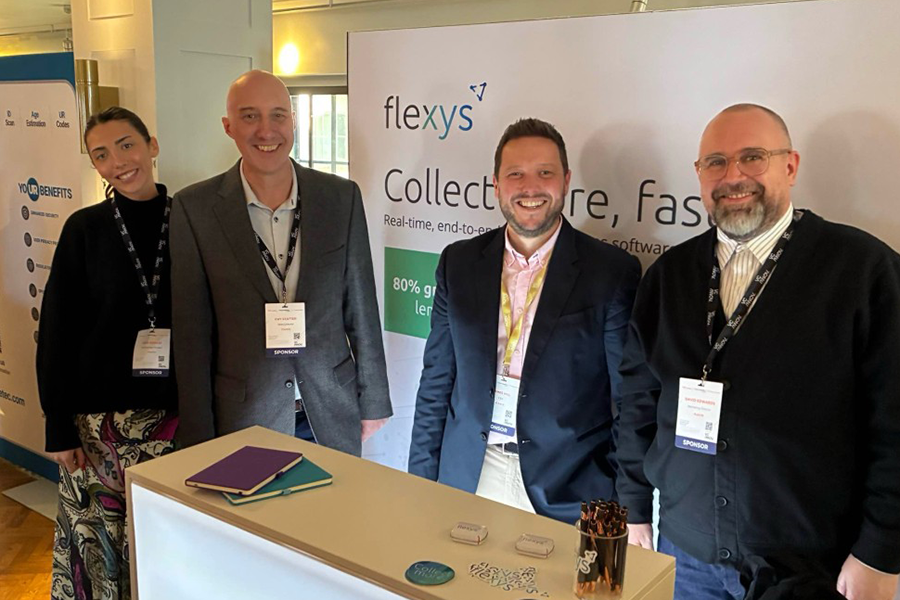
A flurry of familiar faces and fiery conversations is how we’d describe FTT Lending 2026. It’s one of the hottest events in the credit ecosystem - a rare place where you’ll see institutional banks mingling with fresh-faced start-ups and everything in between. Flexys was a proud sponsor, and we made the most of the day. We’re always keen to stay on top of the latest insights and technologies, to provide the best possible service for our clients.
Here are some of the top trends and conversations we picked up on, and how they are reshaping today’s lending landscape.
Lenders adapt for multiple income streams
“The modern borrower has changed dramatically”, explained Tony Hall, Head of Business Development at Saffron Building Society. “We’re moving to a model where people now have side-hustles to make ends meet”.
UK research conducted by VISA in 2024 found almost half (45%) of Gen-Zs have an additional income stream, while over one in three (37%) have two. E-commerce, social media influencing and passion products are the most popular, boasting extra incomes of £218.60 per month. For lenders, the additional £2,623.20 per year is a mixed bag. On the one hand, extra money is always reassuring. On the other, it’s often unreliable. Challenger banks like Tide have expressed concerns over accounting, citing that HMRC fines for social media influencers alone is anticipated to surpass £2 million.
While Gen-Zs lead the way, they are far from the only demographic with a side-hustle. Tony points to the “unretired”, people over 65 who continue working to supplement their pension. Research by Randstad finds that only one in two (51%) expect to retire before 65.
These multiple income streams create “challenges” for lenders, who need to adapt their processes. As well as several money flows, there is also the transient nature of them, alongside income unpredictability.
Risk is becoming a creature with many faces
The changing customer is part of a wider story. Interweaved are rapid technological developments, evolving regulations spearheaded by the Consumer Duty and a tense geopolitical environment. All of these threads spin together to reveal new risks and ways to measure them.
Banks seemed to be particularly aware of this. As CEO of Snappi Bank, Gabriella Kindert questioned, “To what extent are traditional methods predictive for future underwriting standards?”. Chief Credit Officer at Zempler Bank, Rahul Duseja agrees, “risk appetite is not a single number anymore”, he commented. “It has various dimensions”.
Uncovering these dimensions is a work in progress. At Flexys, we have put a lot of work into developing our open banking capabilities, so lenders have a clear view of borrowers’ real-time finances. It can also help to identify financial vulnerabilities, in line with consumer duty requirements. But this is just part of the picture. Zooming out, risks are becoming global as consumers and businesses alike wade through increasing fuel prices, trade wars and cyber hacks. Like Hercules against the Hydra, lenders must fight a toxic creature with many new and growing heads.
What’s more, the potential pitfalls are “dynamic”, comments Toby Wootton, CEO of Crowd2Fund. “If you’re not updating your policies and adapting, that’s when it becomes unhealthy”, he adds.
Cyber criminals leverage AI to continuously attack financial services
Shifting geopolitics are deeply interlinked with cyber risk. Almost two in three (64%) of organisations report that this is the top motivator for attacks, according to World Economic Forum research. As well as stealing consumers’ identities (which can be purchased on the dark web for as little as $5), hackers can also spy or simply create chaos. From phishing to deep fakes, the financial industry is one of the most frequently targeted, with 300x more hits than other industries.
Naturally, cyber defense came up frequently at FTT Lending. Across the panels, networking spaces and at our Flexys stand, we swapped stories of how generative AI exacerbates the situation. Preparing to phish or fool people, “used to take criminals months”, emphasised Martin Rehak, CEO & Founder at Resistant AI. “Now it’s a couple of hours”.
Protecting against these risks requires different types of shields continuously working in tandem, both human and machine. Anecdotally, we’re seeing many services running side-by-side. This brings us to another key trend at this year’s conference; the “stacks within stacks” phenomenon.
Lenders build their own “stacks within stacks” ecosystems
Astonishingly, the average company is running 240 separate applications in the background (according to Zylo 2026 data). For large firms of over 10,000 people, that figure rises to 696. Of course, many of these will be part of a wider Software-as-a-Service (SaaS) stack.
During this year’s FTT Lending, we talked to our community about the rise of companies bundling together different SaaS offerings to cover more bases. Articulated by Flexys’ own CEO, James Hill, we’re calling this trend “stacks within stacks”.
Effectively, lenders create their own custom-made ecosystems to support different customers, departments and needs. As time goes on, we expect this to increase as AI intensifies our reliance on SaaS. Overall this seems like a good move as it can help to plug all the gaps, for example, some panellists pointed to current SME lending shortfalls of up to £65 billion. But lenders should also be careful to ensure rigid oversights along the way. In-house accountability (especially for Compliance) is a must. “People must always be in control”, adds Martin.
Experimenting with AI vs Reassuring the workforce
For all of the AI and SaaS enthusiasm, there is also a nervousness. People are worried about losing their jobs. Finding the balance between experimenting with AI and reassuring the workforce became a recurring theme at the event. “The more that you adopt AI within your business, the more nervous your existing people tend to be”, added Julian Cork, COO Landbuy.
He suggests that the way to overcome this is to think beyond the efficiency gains and towards the people who will be using it. “It’s about how you design, so that people actually perform better in the longer term”, Julian elaborates. “Otherwise there’s a real risk of a quick win and then a slump”. Importantly, it needs to be managed with care. “Massive AI rollout” can result in employees suffering with too much stress and pressure, including “burnout” and a “lack of engagement”. Research backs up Julian’s points. One study by Resume Now reveals that 61% of workers believe that using AI at work will increase their risk of burnout, and even more (63%) fear the impact it will have on their work.
Lenders are walking a tightrope. To keep their employees engaged, they must navigate AI and SaaS carefully. But moving too slowly could result in decreased competition, less regulatory compliance and dwindling customer satisfaction. Controlling the beast of AI requires strategy. As well as keeping employees front of mind, Nicolas Moss, Chief Commercial and Product Officer at Birmingham Bank recommends targeting specific areas. “Keep it really simple”, he recommends. As a bonus, Nicolas adds, “Focusing on one job helps reduce hallucinations” .
Conversations that matter
FTT Lending 2026 marks a unique timestamp in our industry’s journey. Navigating between new AI innovations, SaaS stacks within stacks, cyber intelligence on the one hand. While reassuring employees, meeting customers’ side-hustle needs and keeping watch over geopolitical shifts on the other. It’s a time to both surge forward and guard our oldest principles.
There’s little doubt that we’re entering a new era. One of our favourite quotes came from Scott, “Anybody who says that AI is not impacting their business is really not living in the real world today”.
We’d like to extend our thanks to the organisers behind FTT Lending, and particularly to Victor Cruz. Being at the centre of conversations is a privilege. Shaping the future of lending is our purpose.